
Sommaire :
The Life Cycle Assessment of Aloe Vera juice
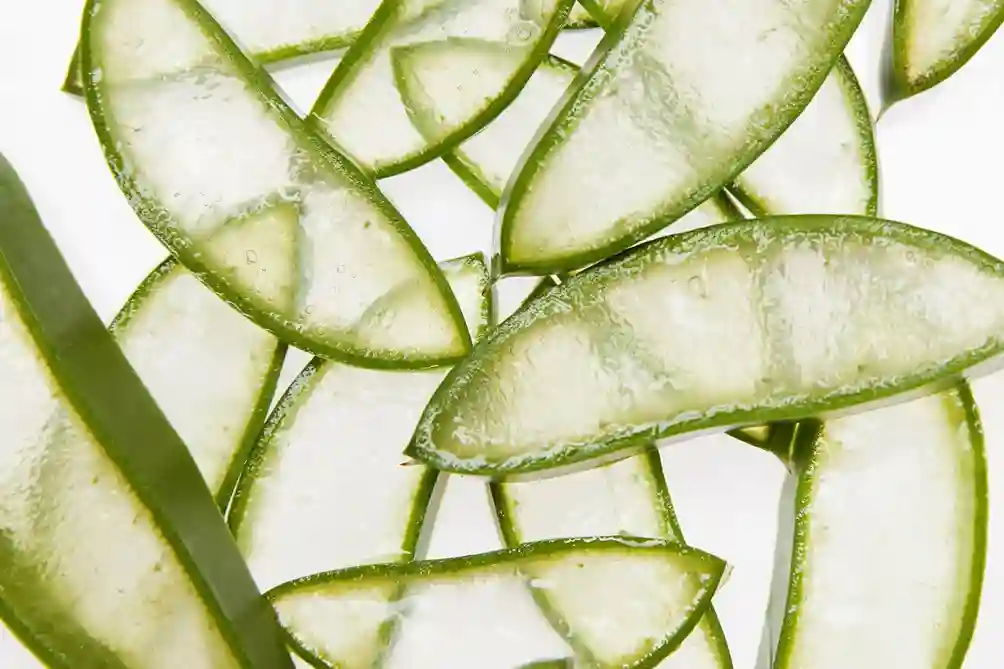
INCI: Aloe Barbadensis Leaf Juice
Aloe Vera Juice: A Hydrating Ingredient with Hidden Environmental Costs
Aloe vera juice, derived from the thick leaves of the Aloe Barbadensis plant, is a staple in global cosmetics formulations—thanks to its moisturizing, soothing, and anti-inflammatory properties. With over 99% water content and rich in bioactive compounds like polysaccharides, it’s a go-to for hydration in skin and hair care products.
But how sustainable is aloe vera juice, really?
At Fairglow, we performed a full ingredient-level Life Cycle Assessment (LCA) to uncover its true environmental impact—from cultivation to formulation shelf.
A High-Water Ingredient Means High Emissions per Unit
Despite its natural appeal, aloe vera juice carries an outsized environmental footprint driven by logistics. The primary culprits? Transport and packaging, which together make up more than 70% of the total climate impact.
Life Cycle Breakdown: Where Aloe Vera Juice Emits Most
These figures reveal that a seemingly “green” ingredient can still carry a heavy carbon load—especially when shipped as a water-dense liquid across global supply chains.
Why Transport and Packaging Are the Hotspots
The unique characteristics of aloe vera juice make its environmental footprint more complex:
- High Water Weight: With >99% water content, aloe vera juice is heavy. That translates to higher fuel consumption and emissions per unit transported.
- Long-Distance Supply Chains: Major producers (India, Mexico, China) often ship aloe juice across continents to formulating labs.
- Liquid Form Shipping: Aloe is rarely concentrated or dried, meaning more packaging and energy are needed per active unit.
Raw Material Requirements: A Resource-Intensive Crop
To extract just 1 kg of aloe vera juice, about 3.3 kg of fresh leaves are needed. A single hectare can yield over 40,000 kg of aloe leaves annually—but this high input-output ratio amplifies upstream logistics, water use, and energy demand.
Want to know the real impact of your ingredients?
Fairglow delivers custom ingredient-level LCAs to help cosmetics brands reduce Scope 3 emissions and improve ESG compliance.


Articles similaires
The Life Cycle Assessment of Shea Butter
Ingredients
1 Aug
5
Min
The Life Cycle Assessment of Shea Butter
1 Aug

Case study: Emission Factor of Rose Flower Oil (Rose Essential Oil)
Ingredients
10 May
5
Min
Case study: Emission Factor of Rose Flower Oil (Rose Essential Oil)
10 May