
Sommaire :
The Life Cycle Assessment of Shea Butter
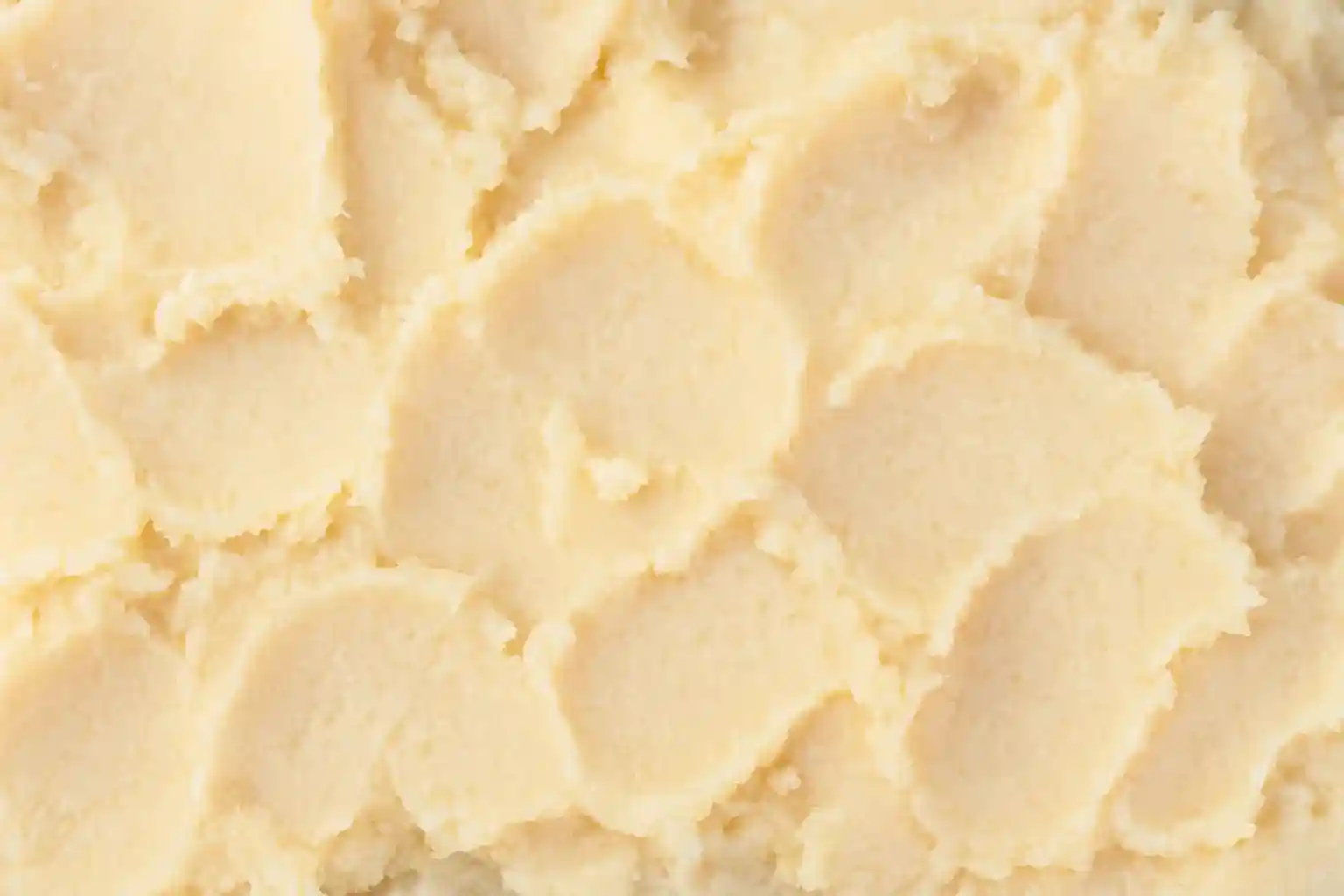
INCI: Butyrospermum Parkii Butter
Shea Butter: A Natural Ingredient with Complex Impacts
Shea butter has long been celebrated in cosmetics for its nourishing and anti-inflammatory properties. Sourced from the seeds of Vitellaria paradoxa, a wild-growing tree native to the West African savanna, it finds its way into more than 13% of cosmetic products—from lip balms and baby creams to hair masks and body lotions.
But beyond its skin benefits and market appeal lies a more complex question: what is the environmental impact of shea butter across its life cycle?
At Fairglow, we conducted a comprehensive life cycle assessment (LCA) to find out. Our goal was to trace every stage—from nut collection to processing, packaging, and transport—to understand which phases carry the heaviest environmental load.
A Low-Impact Crop by Nature
The first surprise: shea butter starts with a climate advantage. Unlike many other plant-derived ingredients, shea trees are not cultivated in plantations. They grow wild, requiring no irrigation, fertilizers, or pesticides.
This means that the agricultural phase of shea butter’s life cycle contributes almost nothing to its carbon footprint. That’s good news for formulators looking for low-impact raw materials.
The Real Impact Lies in Processing
Where things get more carbon-intensive is in the processing phase—the transformation from shea nuts to usable butter.
In many production areas, nuts are boiled or roasted using traditional firewood-fueled methods. Not only does this contribute to deforestation, it also emits large amounts of CO₂ due to inefficient combustion.
In fact, our LCA found that processing accounts for 37.7% of total emissions related to shea butter. That makes it the most climate-impactful stage of the ingredient’s life cycle.
Life Cycle Breakdown: Where Emissions Come From
These figures highlight the need to look beyond the farm when evaluating the sustainability of natural ingredients. Even wild-harvested materials can have high impacts if the processing and logistics are inefficient.
Final Thoughts: A Natural Ingredient Worth Optimizing
Shea butter’s environmental story is a reminder that "natural" does not automatically mean "low impact." While its wild growth profile is a clear advantage, the traditional processing methods introduce significant emissions.
With targeted improvements in energy use, packaging, and supply chain transparency, shea butter can remain a trusted ingredient—one that delivers both performance and progress toward sustainability goals.
FAQ: Environmental Impact of Shea Butter
Is shea butter environmentally friendly?
Partially. While cultivation has minimal impact due to wild harvesting, traditional processing methods using firewood are highly carbon-intensive.
What is the biggest source of emissions for shea butter?
Processing is the largest contributor, accounting for 37.7% of total emissions, primarily due to inefficient fuel combustion.
Can brands reduce the environmental footprint of shea butter?
Yes. By working with suppliers using clean energy, choosing eco-packaging, and optimizing transport logistics, emissions can be significantly lowered.
Does Fairglow offer LCAs for other ingredients?
Absolutely. We deliver custom LCAs across hundreds of INCI-listed ingredients to help brands tackle Scope 3 emissions.
Want to know the real impact of your ingredients?
Fairglow provides custom ingredient-level LCAs to help brands and manufacturers reduce their Scope 3 emissions.


Articles similaires
The Life Cycle Assessment of Aloe Vera juice
Ingredients
1 Aug
3
Min
The Life Cycle Assessment of Aloe Vera juice
1 Aug

Case study: Emission Factor of Rose Flower Oil (Rose Essential Oil)
Ingredients
10 May
5
Min
Case study: Emission Factor of Rose Flower Oil (Rose Essential Oil)
10 May