
Sommaire :
ESPR Approved: What does the ESPR mean for the Cosmetics Industry?
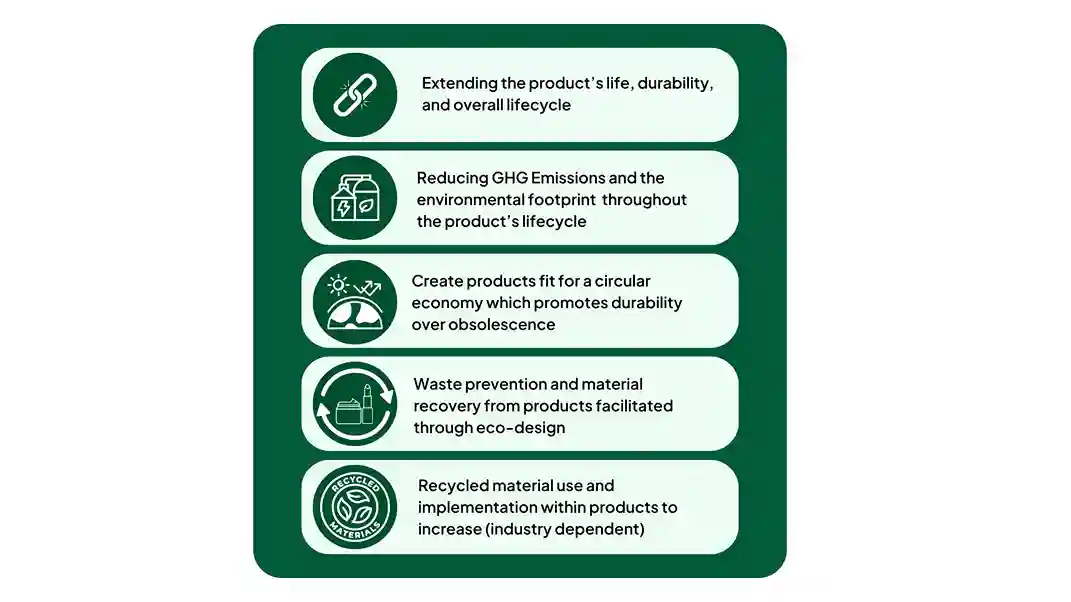
May 2024 marks the European Ecodesign for Sustainable Products Regulation’s (ESPR) approval.
The ESPR replaces the Ecodesign directive, and expands the scope across industries. This article provides an overview of the ESPR, from the cosmetic industry’s perspective.
What is the ESPR, why is it relevant?
ESPR is a broader regulatory proposal, which encompasses multiple products and industries. The aim is to reduce the environmental impact products have, and create synergies across the circular economy legislation part of the EU Green Deal.
In addition to packaging requirements, the Ecodesign Regulation mandates that manufacturers consider the environmental impact of the product itself. This includes using sustainable materials and minimising the environmental footprint throughout the product’s life cycle, from production to disposal.
The Ecodesign for Sustainable Products Regulation represents a significant move towards enhancing sustainability in the beauty and cosmetics industry, aiming to reduce the environmental impact of these products.
What is Eco-Design under ESPR?
- Product durability, reusability, reparability
- Energy & resource efficiency
- Recycled content
- Product remanufacturing & high-quality recycling
- Reducing carbon & environmental footprints
What are the ESPR requirements ?
Extended Producer Responsibility (EPR)
EPR is an environmental policy that shifts responsibility for a product's lifecycle, including design, take-back, recycling, and disposal, to the producer. EPR aims to ensure producers engage in sustainable practices and decrease the environmental impact of their products and packaging. The EU has introduced mandatory minimum requirements to harmonize EPR schemes across member states and drive investments into collection and recycling.
Energy Efficiency
The ESPR empowers the setting of requirements to improve the energy and resource efficiency of products.
This supports the EU's goal of achieving climate neutrality by 2050. By establishing performance standards and information disclosure rules, the ESPR will drive innovation towards more energy-efficient products and help consumers make informed choices.
Transparency and Traceability
The Digital Product Passport introduced by the ESPR will store key information about a product's sustainability, including its materials, origin, repair history, and recycling capabilities. This will enhance transparency and traceability, allowing consumers, manufacturers, and authorities to make more informed decisions related to a product's environmental impact and regulatory compliance.
What are the ESPR reporting requirements for cosmetics?
The Ecodesign for Sustainable Products Regulation (ESPR), which comes into force in July 2024, includes comprehensive reporting requirements that aim to ensure products meet new sustainability criteria. For cosmetic companies, these requirements focus on various aspects, primarily focusing on packaging and ingredient sourcing.
Below is a breakdown of ESPR reporting requirements relevant to the cosmetics, beauty, and skincare industry:
Product Compliance Documentation
Cosmetic companies must provide detailed documentation demonstrating compliance with the ESPR's sustainability criteria. This includes:
- Product Durability: Evidence showing how products are designed for long-term use, reducing the need for frequent replacement.
- Reparability: Information on how products can be easily repaired, including availability of spare parts and repair manuals - specific to electronics
- Recyclability: Data on the materials used in products and their recyclability, including the proportion of recyclable materials in packaging and formulations.
Product Circularity (Ingredients)
Reports must include detailed information on the sourcing of ingredients used in cosmetic products. This includes:
- Ingredient Circularity: Product conception should promote circularity, remove all ingredients which would otherwise prevent it’s reuse or recyclability. Substances of concerns should similarly be removed.
- Source Transparency: Documentation of the origins of raw materials, ensuring they are sustainably and ethically sourced.
- Environmental Impact: Assessment of the environmental impact of ingredient sourcing, including water usage, land use, and carbon footprint.
Increased Packaging Sustainability
Companies need to report on the sustainability of their packaging, focusing on:
- Material Composition: Breakdown of materials used in packaging, emphasising the use of recyclable or biodegradable materials.
- Reduction Strategies: Measures taken to minimise packaging waste, such as using lightweight materials or innovative design to reduce packaging volume.
Energy and Resource Efficiency
Reports must cover efforts to improve energy and resource efficiency in the production process. This includes:
- Energy Consumption: Data on energy usage during manufacturing, including steps taken to reduce energy consumption.
- Resource Utilization: Information on how resources, such as water and raw materials, are efficiently used and conserved in production processes.
Lifecycle Assessment
A comprehensive lifecycle assessment (LCA) of products is required to provide a full picture of their environmental impact. This includes:
- Carbon Footprint: Detailed calculation of the carbon emissions associated with the entire lifecycle of the product, from raw material extraction to disposal.
- Environmental Impact: Evaluation of all other environmental impacts, such as water footprint, soil degradation, and ecological effects.
Timeline for Implementation and Reporting EU Ecodesign Regulation
Companies will have 18 months from the adoption of a delegated act to begin reporting. The likelihood is that most countries will begin 2027 onward, with full implementation on all fronts in 2030.
The delegated acts will determine the requirements for information presentation. The display modalities will require direct access visibility on the product, and therefore will require disclosures with regards to hazardous substances, packaging material, use-phase guidelines, maintenance guidelines and proper disposal instructions.
These guidelines are part of the New Digital Product Passport, and expand on the overall regulatory initiative to increase traceability across a products entire value chain.
The delegated acts, alongside the product disclosure requirements, and the mandatory information disclosures will offer guidelines on the disclosures placement, model and identifiers.
Relevance for the Cosmetics, Beauty, and Skincare Industry
The new ESPR regulation holds significant implications for the cosmetics, beauty, and skincare industry, focusing mainly on sustainable packaging, ingredient sourcing, and production processes. Companies in this sector will need to:
- Adopt Sustainable Packaging: Reduce plastic use and enhance the recyclability of packaging materials.
- Ensure Sustainable Ingredient Sourcing: Utilise environmentally friendly ingredients and production methods.
- Invest in Compliance: Allocate resources to meet the new standards, which may involve adjusting supply chains and production techniques.
Cosmetics, beauty, and skincare brands should adopt a proactive approach to eco-design to effectively prepare for the implementation of the ESPR. Conducting comprehensive evaluations of product lines can reveal areas for improvement in sustainability and streamline the compliance reporting process.
Fairglow, a carbon management and life-cycle analysis tool, can play a crucial role in helping companies navigate the regulatory timeline and meet ESPR requirements. By providing detailed insights into the carbon footprint and environmental impact of products, Fairglow enables companies to:
- Monitor Compliance: Effectively track and report on sustainability metrics from the outset of the initial reporting phase in 2025.
- Optimize Processes: Identify areas for improvement in packaging and ingredient sourcing to enhance sustainability.
- Streamline Reporting: Simplify the process of compiling detailed compliance reports, ensuring timely and accurate submissions.
By integrating Fairglow into their operations, companies ensure adherence to ESPR standards and position themselves as leaders in sustainability, appealing to eco-conscious consumers and gaining a competitive market advantage.


Articles similaires
Is environmental labeling mandatory for cosmetics?
The fashion industry is paving the way for a path that the cosmetics industry has already embarked upon.
Reglementation
20 Jul
Is environmental labeling mandatory for cosmetics?
The fashion industry is paving the way for a path that the cosmetics industry has already embarked upon.
20 Jul

PWR, EMPCO, UWTD: Why are these regulations a game-changer?
Behind these new regulations lies a more profound transformation for the cosmetics industry.
Reglementation
10 Jun
PWR, EMPCO, UWTD: Why are these regulations a game-changer?
Behind these new regulations lies a more profound transformation for the cosmetics industry.
10 Jun

The EU’s Corporate Sustainability Reporting Directive (CSRD) for Cosmetics
Reglementation
13 Jan
5
Min
The EU’s Corporate Sustainability Reporting Directive (CSRD) for Cosmetics
13 Jan